
What happens to the author’s voice when generative artificial intelligence becomes part of the academic writing process? Can we speak of a new ‘death of the author’, in the Barthesian sense, but this time brought about by algorithms?
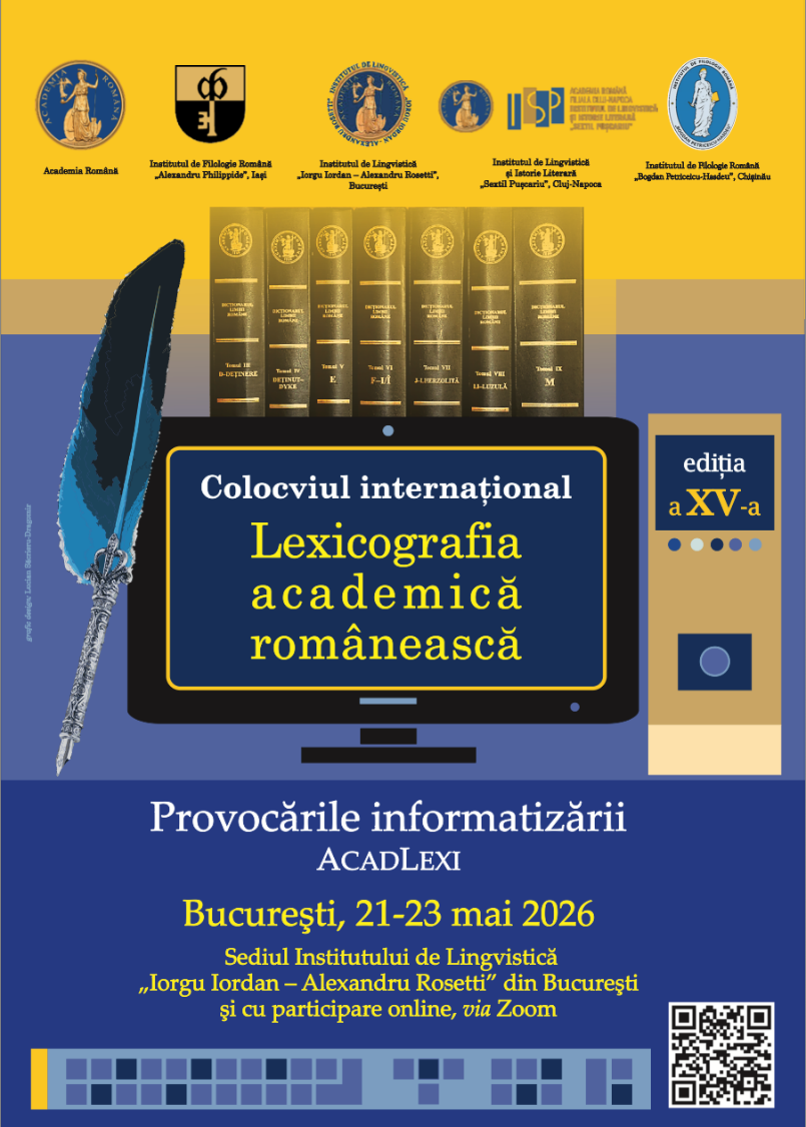
This was one of the questions addressed at the International Colloquium ‘Romanian Academic Lexicography. The Challenges of Computerisation’ – AcadLexi (Bucharest, 21–23 May 2026), in the paper „O nouă «moarte a autorului»? Transformări în scrierea academică românească în era IIA generativă” (A new “death of the author”? Transformations in Romanian Academic Writing in the Era of Generative AI), authored by Roxana Rogobete, Dumitru Tucan, Karla Csürös and Mădălina Chitez, as part of the TRAI project.
The study aims to analyse the impact of large language models (LLMs) on students’ academic writing practices in Romanian, examining both the deliberate or covert use of these tools and the unintended influence of ‘artificial rhetoric’ with which students come into contact. The analysis is based on a comparable corpus of undergraduate dissertations in the field of philology at the West University of Timișoara: dissertations from 2022 (prior to the emergence of generative AI) and from 2025 (post-generative AI).
Preliminary findings suggest the emergence of template-like structures and increasingly predictable writing patterns, seemingly inherited from the training data of large language models. These findings also raise important questions about the depersonalisation of academic discourse and the evolving notion of authorship in the age of generative AI.
A recording of the presentation is available here (minute 1:29:00): https://www.youtube.com/watch?v=5RpHetWDXBE